The Rosalia Railroad Bridge
Finding the "Aqueduct" of the Palouse
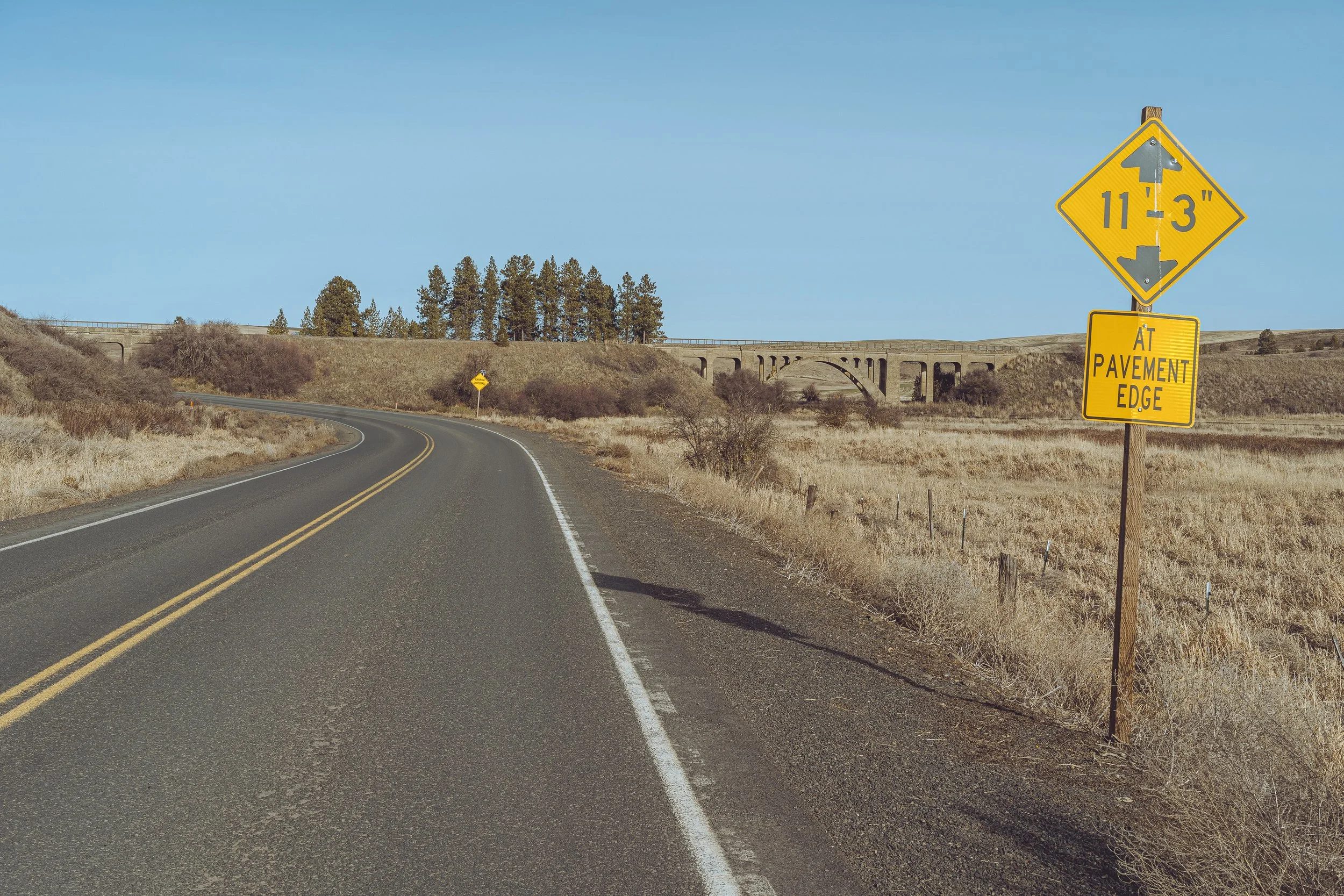
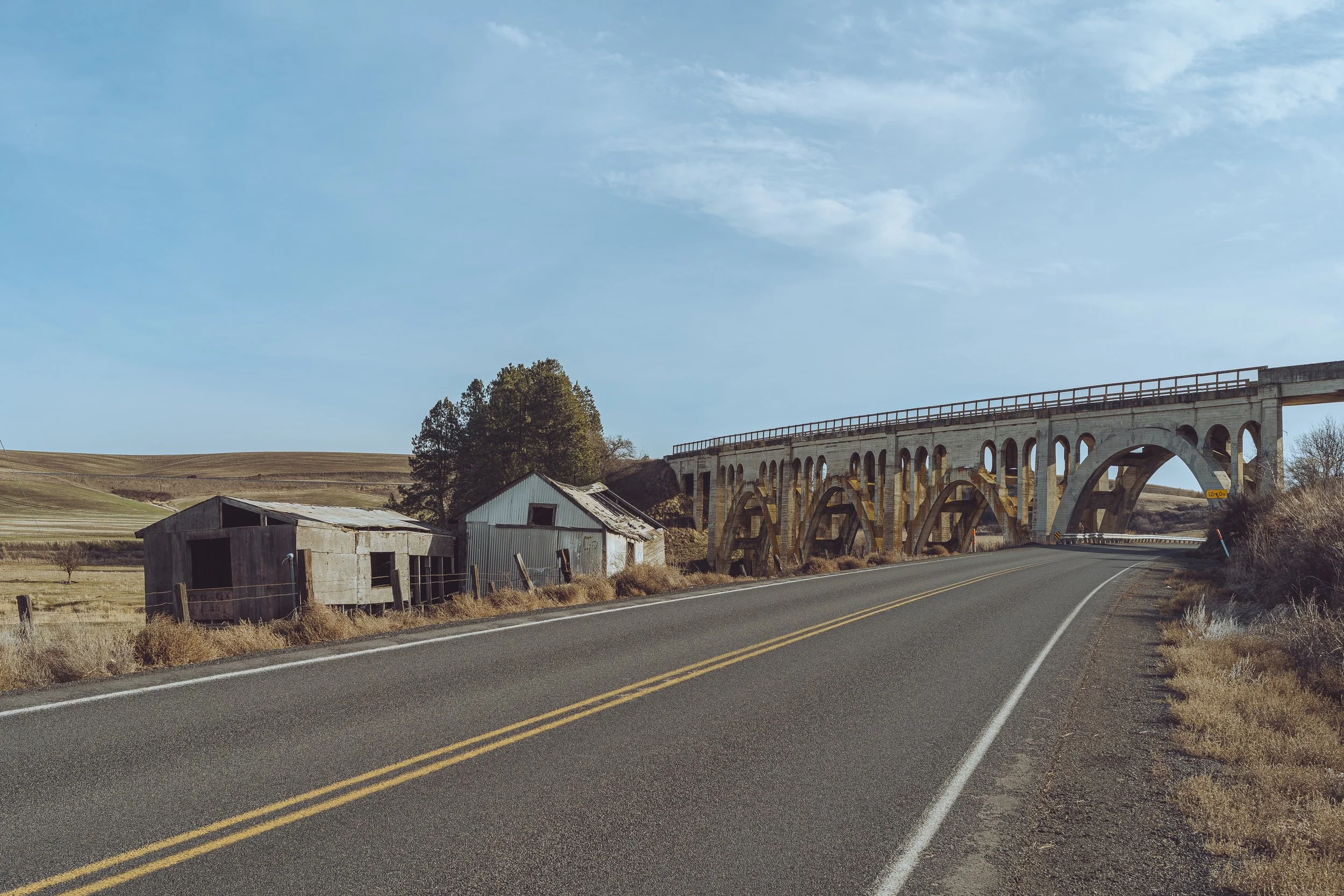
There is a specific kind of magic in the Palouse, where the rolling hills meet the remnants of industrial ambition. On my most recent stop in Rosalia, Washington, I found myself standing beneath a structure that felt less like a railroad crossing and more like a piece of ancient history.
While Google Maps might label the path above as "Milwaukie Road," locals and history buffs know it as the ghost of the Chicago, Milwaukee, St. Paul and Pacific Railroad.
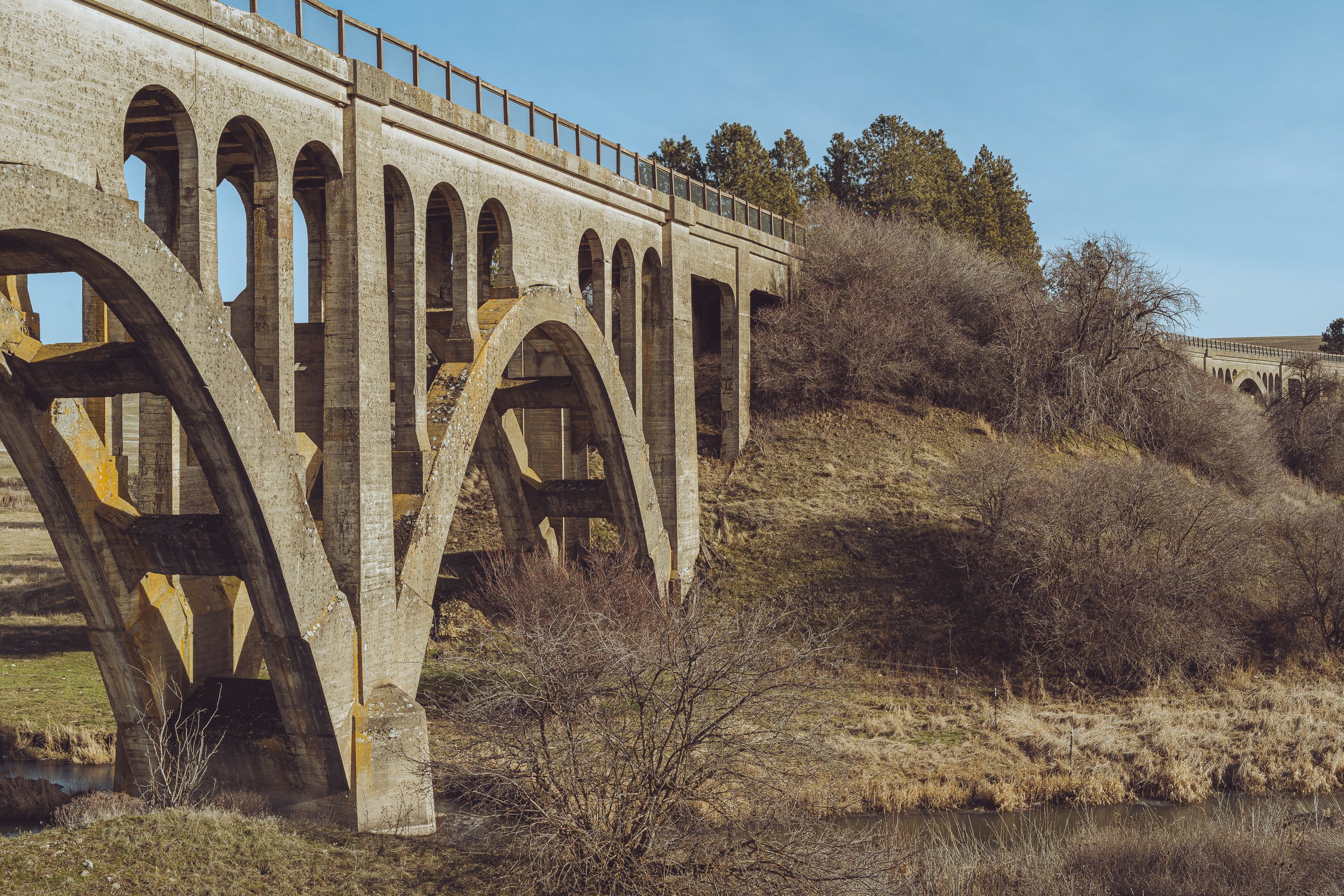
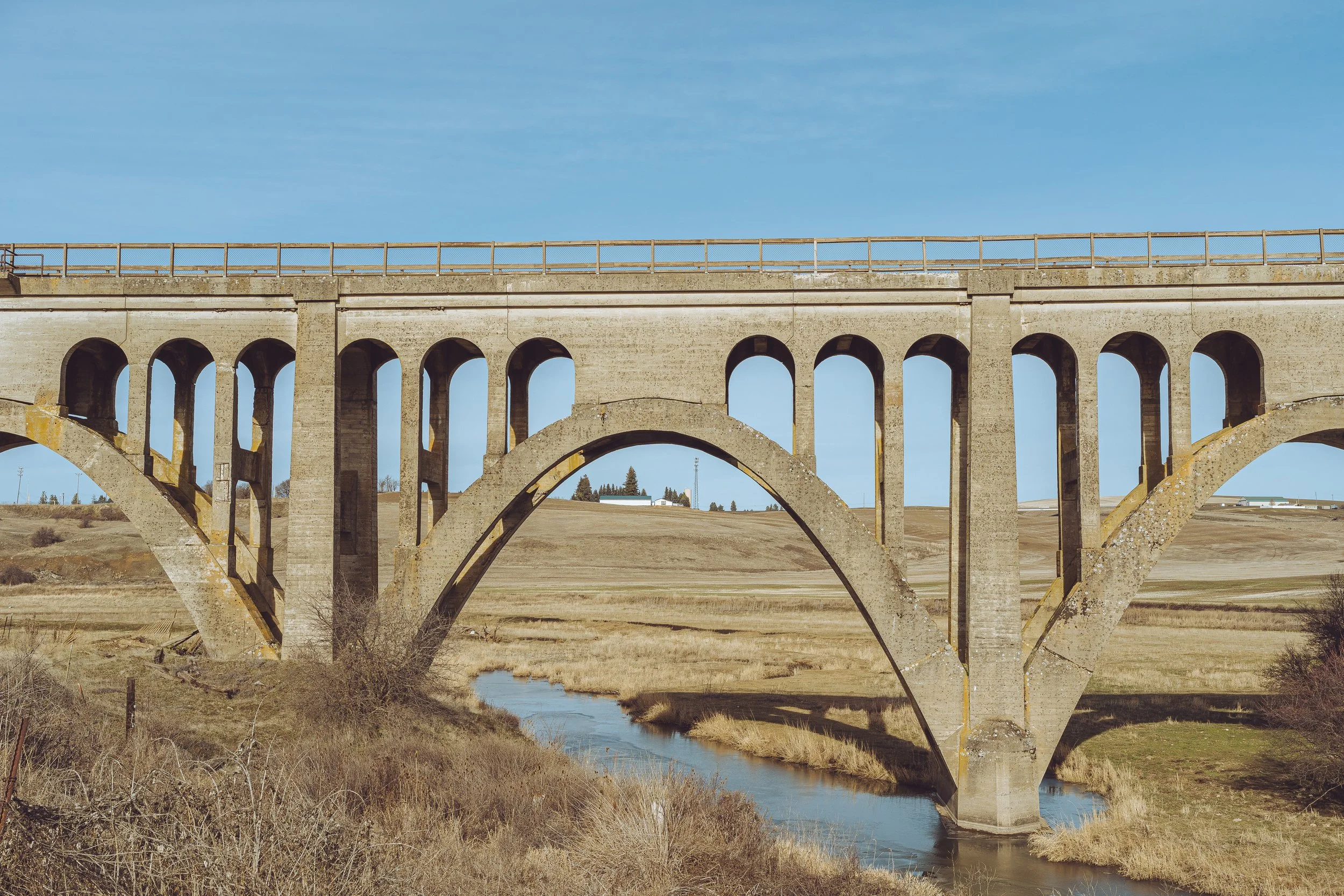
Built in 1915, the Rosalia Railroad Bridge wasn’t just designed for transport—it was designed to make a statement. At the time, the Milwaukee Road was locked in a fierce competition with the Northern Pacific Railroad. To flex their engineering muscles, they bypassed the standard steel and timber designs of the era in favor of these massive, reinforced concrete arches.
The result? A bridge that mimics a Roman aqueduct, built specifically to impress travelers on the nearby highway and to literally tower over the competing tracks below.
The tracks are long gone, pulled up in 1980, and the path has been reclaimed as the Palouse to Cascades State Park Trail. Standing there with my camera, it’s hard not to feel the weight of that transition—from the thundering steam engines of the early 20th century to the quiet, wind-swept trail it is today.
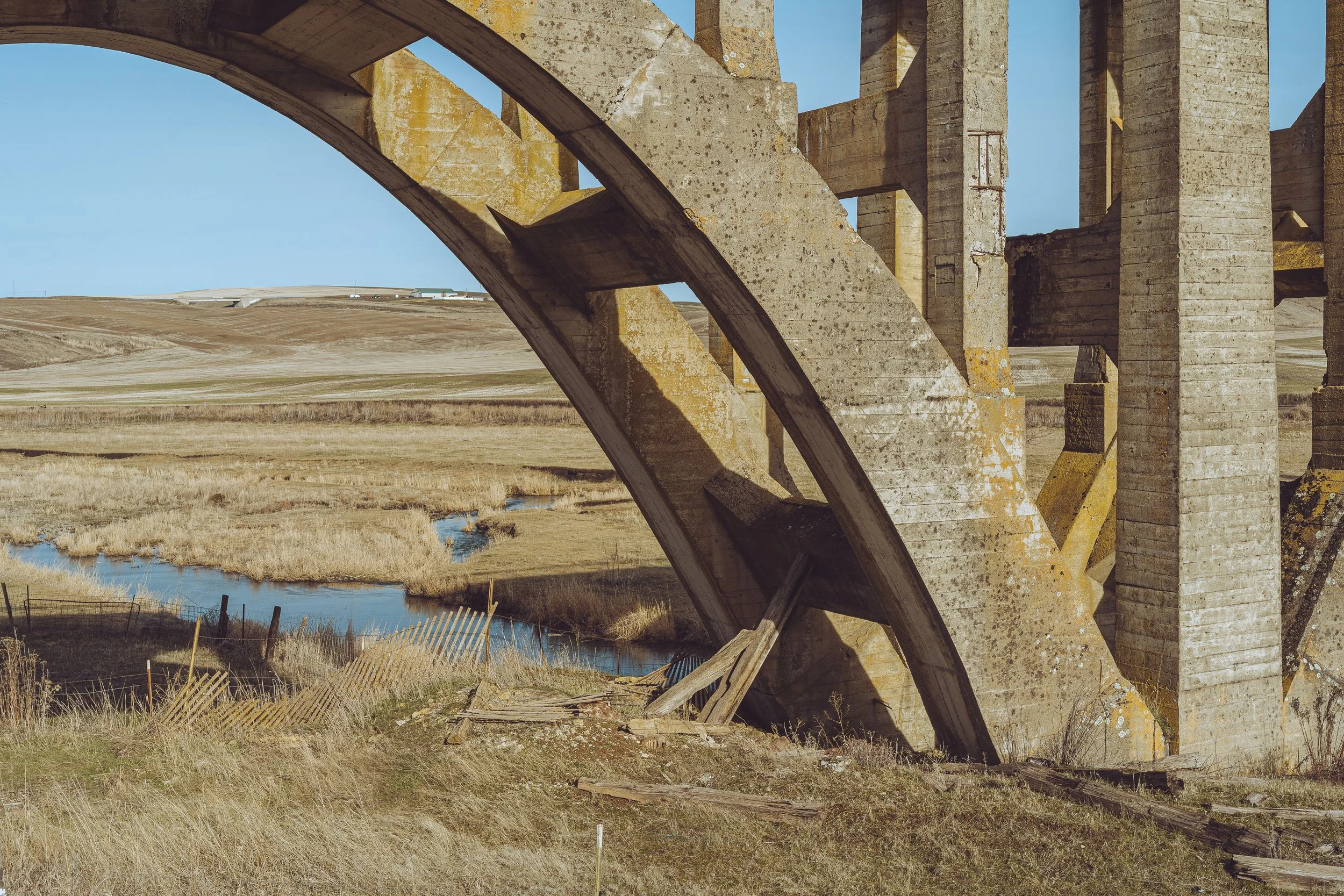
The contrast between the stark, weathered concrete and the soft, rhythmic curves of the Washington landscape is a dream for any photographer. It’s a reminder that even in the middle of a wheat field, you can find a monument to human ego and architectural beauty.